Wednesday, May 22, 2013

Debora Oden's Raw Linear Fields

Debora Oden's work emphasizes repeated line, building forms out of ambiguity with shadowy structure and the implication of narrative through the organization of symbolic elements..... 
Hmm, that's a mouthful for what the viewer experiences as a purely visceral response. In fact, the visual receptors are working full-throttle in most of these images. I came across Oden's work when looking at the list of artists participating in University of Wisconsin at Steven's Point 'Monoprint 2013' workshop,(5/31-6/6/2013). (For those curious souls amongst you, I will be reviewing that workshop shortly, so stay tuned, my inked up comrades)

Oden's built-up  linear scratches remind me of quiet spaces quiet where no one would dare to speak in normal-decibled voices. These are spaces where one hears whispers and fragmented stories ushered in hushed tones. Oden shows us some open patches which allow us a small breathing space, but they become suddenly cluttered with layers and layers of linear chaos. I wasn't able to find much information about Oden's subject for these pieces beyond the technical making of the work (which, as you all know we printmakers can figure that out, so it will not grace this article), but there seem to be inferences toward landscape, and abstracted exterior places. Her colors are sensitively woven together and the tactile nature of the work is also pleasing to the eye. 
I do appreciate the 'drawing-ness' of these prints and her willingness to let all the lines show, regardless of whether they work or not, and they mostly work. The rawness of her overlaid lines, like  the frayed out feel of a old curtain sheer,  reveals more about oneself and the acquiring and unraveling of one's life experiences.  Oden is letting us inside of herself, seeing all the goo and sinews of her memories and her nerve-endings. It can be uncomfortable for some to comprehend the work in this context, but it feels correct. Some of the pieces have a tiny deliberate addition of three red dots, like dots of one's own blood, but more likely they represent energy chakras. This adds some metaphysical aspect to the work, but I 'get it' without them just as well.
Once in a while Oden puts in some recognizable object from the outer world, like the airplane above. They are drawn more playfully, but quite frankly, they do not add meaningful interpretation to the work. It's almost as if the artist doesn't trust herself to let the lines just 'be' enough. If she lost and found the plane instead of letting us truly see all of it, then it could add to the piece more effectively. The print below expands the spatial depth for us, and brings a connection with the field painters and the abstract 'oneness' of Mark Rothko. Here, we are inside the composition, walking through the lines, with the lines, in a space with out heaven or earth. Her pops of red bring us in with the picture, as though they are living souls that we have found in a fog. 
Yet my favorite of this group is this last image. Cool greens and dark blue-grey-blacks permeate the surface. We are walking along at a river's edge in late summer, at dusk, under some heavy-hanging willow tree branches . Here, the air is heavy with moisture and dew, but our oneness with nature is complete, and voicelessly understood. Oden is well on her way to creating an abstract language of line as we've seen before with the likes of Cy Twombly, but in her case the work is less superficially gestural. Her lines are measured, but not deliberate.They communicate effectively without needing to be violently aggressive. There is an organic fact-finding in her drawing approach, and as I said before she is comfortable with our seeing 'all' of her creative process, which goes against the grain of a lot of printmakers who work and re-work their image, making the most microscopic corrections to perfect their image. I applaud Oden's release from such constraints and hope more 'artists' will embrace printmaking in a similarly free and courageous manner.

EDUCATION
M.F.A. University of Nebraska-Lincoln, Lincoln, NE
B.F.A.  University of Nebraska-Lincoln, Lincoln, NE

TEACHING EXPERIENCE
Savannah College of Art and Design, Savannah, GA
University of Wisconsin - Stevens Point, Stevens Point, WI
University Place Art Center, Lincoln, NE
Nebraska Wesleyan University, Lincoln, NE

FELLOWSHIPS and AWARDS
Individual Artist Fellowship-Encouragement Award, Nebraska Arts Council, Lincoln, NE
Residency Scholarship, Anderson Ranch, Snowmass Village, CO
A-Z Recognition Award, Roots and Crown, Great Plains Museum, Lincoln, NE
The Arton Paper Award, 77th
Annual International Competition: Printmaking,The Print Center, Philadelphia, PA
Vreeland Award for Fine Art, University of Nebraska-Lincoln, Lincoln, NE
Kimmel Fellowship in Studio Art, University of Nebraska-Lincoln, Lincoln, NE
Eisentrager-Howard Assistantship, University of Nebraska-Lincoln, Lincoln, NE
UNL Graduate Assistantship, University of Nebraska-Lincoln, Lincoln, NE
Regents Tuition Fellowship, University of Nebraska-Lincoln, NE
Lincoln Print Group Travel Award, University of Nebraska-Lincoln, Lincoln, NE
Coleman Award for Printmaking, University of Nebraska-Lincoln, Lincoln, NE

SOLO EXHIBITIONS
Museum of Nebraska Art, Kearney, NE
Sherry Leedy Contemporary Art, Kansas City, MO
The Dose Makes the Poison, Folsom Gallery, University Place Art Center, Lincoln, NE
Recent Work, Folsom Gallery, University Place Art Center, Lincoln, NE
What Ships Are Built For, Eisentrager-Howard Gallery, University of Nebraska-Lincoln, Lincoln, NE
New Prints, Kimmel Harding Nelson Center for the Arts, Nebraska City, NE
Large Drawings, The Rotunda Gallery, University of Nebraska-Lincoln, Lincoln, NE

COLLECTIONS
Bemis Center for Contemporary Arts, Omaha, NE
Shook Hardy& Bacon, Kansas City, MO
Sheldon Memorial Art Gallery, Lincoln, NE
Department of Fine and Performing Art, University of Nebraska-Lincoln, Lincoln, NE
Department of Art, University of Dallas, Irvine, TX

Hallmark Global Services, Inc.

Contact: DeboraOden.com • info@DeboraOden.com

Thursday, May 16, 2013

Carlos Hermosilla Álvarez: Chilean Printmaker and Poet

In 20th c. history, the renowned Chilean printmaker and poet Carlos Hermosilla Alvarez (1905-1991) came to be revered in his homeland, but remained relatively unknown outside some academic circles in the United States. The reasons are many, but what grows stronger with the passage of time are  Hermosilla Alvarez' images and the impact of his words, which sought to right a wrong, and help free millions of oppressed Chileans from the dictatorship of Augusto Pinochet.

Hermosilla Alvarez was born in Cerro, Chile to Carlos Hermosilla Sanhueza and Maria Isabel Alvarez. He was the eldest of three boys from a middle income family.  Eventually, the family moved to Santiago where Hermosilla Alvarez' father worked as a lithographer. Unfortunately, Hermosilla Alvarez' youth was spent in and out of hospitals, suffering numerous operations after contracting tuberculosis. It decalcified his bones and required a lot of recuperation. He vowed to become an artist despite losing and arm and a leg to the disease. He began to draw during this period, and eventually met and married his future wife, Maria Pinto, a nurse and sculptresss. Hewould later write poems about his difficult youth. 

He drew  the working people and peasants of Chile. In the southern part of the country he observed the area’s dockworkers, fishermen, and homemakers. He went into the Lota mines to see firsthand the miners' arduous life. He also sold newspapers which exposed him to the realities of World War I “.He worked as a messenger boy for the local telegraph and cable. He also illustrated the early works of a number of Chile’s most famous authors: Efraim Sxmulewicz , Pablo de Rokha  and Nicomedes Guzman.  

In the 1920s he began to submit his work for exhibition, winning his first art competition in 1927. Three years later, he entered the University of Chile in Santiago. Upon graduation he was hired in 1939 as Professor of Printing and Drawing at the fledging la Escuela de Bellas Artes (the School of Fine Arts) in Viña del Mar, Chile. He along with a small group of other professors literally built an art program from scratch. Although he won numerous prizes, awards, and honors for his artistic and social contributions to Chilean art and society, his first priority was his students. He put his teaching ahead of his own career and was well-known for his generosity. He was also known for his loyalty to the working class from which he had sprung.
Hermosilla Alvarez taught art for nearly 34 years until 1973 , when a military coup placed Augusto Pinochet in power. Then Hermosilla Alvarez shifted his creative energies to writing poetry. It became an outlet for his opposition to the Pinochet regime. One method of his opposition, was to make print portraits of leading opposition figures.  He also published many poetry collections dealing with the workers, peasants, fishermen, and ordinary citizens of Chile as well as the country’s cultural and artistic elites.
As a result of President Franklin Roosevelt’s Good Neighbor Policy cultural exchanges in the 1940s, Hermosilla Alvarez' work was first seen in the United States. Exhibitions of his work were held in the US, Finland, Germany, and France and the proceeds went to support the exile Chilean communities and the various domestic causes which he and his wife supported.


Hermosilla Álvarez talked at length about the choices Chilean artists had made to elude the control of the Pinochet regime and the fight for the return to democracy. 
“If I’m invited by an organization controlled by the Government of course I would refuse to participate, but what we have left are private galleries, independent institutions, and cultural centers. Now if those doors are closed for us we still have the streets to show our work. What I am advising you is that you also look for those alternative spaces, but you should never accept defeat…”


Hermosilla Álvarez made an unwavering lifelong commitment to social justice and to democracy . He and his wife lived among the working people whom he portrayed with dignity and respect. His life and work have been documented in numerous works in Spanish since his death.  In 2012, the University of Playa Ancha created the First Annual Carlos Hermosilla Art Contest.

There are many references to his work in latin Amrican art chronicles, and the University of Colchester, In Essex, England has the largest public collection of his works. He donated thousands of his prints to the Municipality of Viña del Mar and la Universidad de Playa Ancha (renamed from la Escuela de Bellas Artes). A gallery (Sala Hermosilla)was later named in his honor. 


Democracy has once again returned to Chile, through the efforts of millions of Chileans like Carlos Hermosilla Álvarez. The artist and poet lived to see his country’s return to democracy, and now we can see his spectacular prints which spoke of the trials of his countrymen


En Espanol

Biografía
Carlos Hermosilla Álvarez, dibujante y grabador. Nació en Valparaíso, Chile el 18 de octubre de 1905. Falleció en Viña del Mar el 16 de agosto de 1991.
Ingresó a la Escuela de Arte de la Universidad de Chile en 1930 luego de una difícil infancia y juventud marcada por la pobreza, la     enfermedad y el trabajo en humildes oficios. Fue alumno de Ana Cortés. Inició estudios de grabado en el Taller de Artes Gráficas fundado por Marco Bontá.
Fue profesor de dibujo y grabado de la Escuela de Bellas Artes de Viña del Mar desde 1939, labor en la que destacó como formador de varias generaciones de grabadores chilenos y fundador del Taller de Artes Gráficas de la misma ciudad.

Estrategia Visual
Su carrera artística se desarrolló en el área de la gráfica, el dibujo en grafito y en especial el grabado litografía, xilografía, zincografía, aguafuerte, puntaseca, linóleos y monocopias.
Fue autor de innumerables retratos de personajes públicos de la sociedad chilena, escenas populares y paisajes, en especial el puerto de Valparaíso.
Parte significativa de sus obras son un reflejo del dramatismo que marcó su vida personal y sus esfuerzos por superar las dificultades.
PREMIOS Y DISTINCIONES
1926 Primer Premio de Acuarelas, Concurso Ateneo Artístico Obrero de Valparaíso, Chile.
1927 Primer Premio de Pintura al Óleo, Concurso Ateneo Artístico Obrero de Valparaíso, Chile.
1936 Mención Honrosa, Salón Oficial de Santiago, Chile.
1936 Segundo Premio grabado Salón de Verano, Viña del Mar, Chile.
1937 Primer Premio Exposición del Cuarto Centenario, Valparaíso, Chile.
1938 Primer Premio Salón Oficial, Santiago, Chile.
1940 Medalla de Oro Exposición de Arte Chileno en Buenos Aires, Argentina.
1945 Primer Premio de Grabadores, Salón de Verano, Viña del Mar, Chile.
1947 Primer Premio de Pintura, Salón de Verano, Viña del Mar, Chile.
1947 Primer Premio de Dibujo, Salón de Verano de Viña del Mar, Chile.
1965 Designado Ciudadano Ilustre de Valparaíso, Chile.
1970 Premiado con un viaje a la República Democrática Alemana y condecorado por la Federación de Artistas Plásticos de la República Democrática Alemana.
1971 Premio Artista del Pueblo, otorgado por el Instituto de Arte Latinoamericano de la Universidad de Chile, Santiago, Chile.
1984 Designado Miembro Honorario de la Asociación de Pintores y Escultores de Chile, Santiago, Chile.
1989 Premio Cultural 1989, otorgado por la Asociación de Mujeres Periodistas de la V Región, Valparaíso, Chile.
1990 Premio Especial, Críticos de Arte, Santiago, Chile.

EXPOSICIONES INDIVIDUALES
Chile, Brasil, Perú, Ecuador, Colombia, Argentina, Estados Unidos, Francia, República Democrática Alemana, Alemania Federal, Bélgica

EXPOSICIONES COLECTIVAS
Chile, Argentina, Estados Unidos, Brasil, Colombia, Perú, Austria,Uruguay, España, Alemania, Reino Unido.
Obras en Colecciones Públicas
Chile
MUSEO HISTÓRICO NACIONAL, SANTIAGO
BIBLIOTECA SEVERIN DE VALPARAISO 
COLECCIÓN DE LA UNIVERSIDAD DE PLAYA ANCHA, VALPARAÍSO
MUNICIPALIDAD DE VALPARAISO
MUSEO HISTÓRICO GABRIEL GONZÁLEZ VIDELA, LA SERENA
MUSEO DE ARTE CONTEMPORÁNEO, UNIVERSIDAD DE CHILE, SANTIAGO
MUSEO DE ARTE Y ARTESANÍA DE LINARES
MUSEO DE VIÑA DEL MAR
PINACOTECA DE LA UNIVERSIDAD DE CONCEPCIÓN
UNIVERSIDAD DE PLAYA ANCHA, VALPARAISO
SANATORIO DE VALPARAÍSO, VALPARAÍSO
International
UNIVERSITY OF ESSEX COLLECTION OF LATIN AMERICAN ART, ESSEX, REINO UNIDO

MUSEO DE LÍDICE, REPÚBLICA CHECA
MUSEO DE WASHINGTON, ESTADOS UNIDOS

MUSEO DE STALINGRADO, RUSSIA

Sunday, May 5, 2013

Anwar Jalal Shemza: A Modernist's Depiction of Islam

 Anwar Jalal Shemza (1928 - 1985) An artist and writer, Shemza was born into an Indian Kashmiri family of carpet makers. He went to school in Lahore, and eventually opened his own commercial art studio in 1947, also in Lahore. He was a leading member of a modernist group called the Lahore Art Circle, and he quickly became a leading figure in Pakistan's cultural life.
He went to England to study art at the prestigious Slade School of Fine Art in London. In 1960, he received a scholarship from the British Council to study printmaking. While he was in Britain, he met and married English artist Mary Katrina, and they had two daughters. Shemza and his wife traveled to Pakistan for several times, but they later settled in Stafford, England, where he taught art and design at area high schools.

Shemza was initially influenced by Modernism most notably Paul Klee although later works also showed a traditional Islamic influence. During the 60s, Shemza incorporated Islamic themes into his work, like using aspects of the prophet Mohammed’s name, imaginary plants and roots derived from Arabic script, and illegible patterns of Arabic letters. Shemza drew inspiration from the strong linear lines in Arabic and Persian calligraphy because he liked their structure, which is geometric yet the forms remain fluid and rhythmic. This blend of calligraphic curves and linear pattern, were suggestive,  to him, of Islamic architectural facades or elaborate patterned designs of Eastern carpets and textiles.
There is something archetypal in Shemza's work, for certain, but there also some loose, mathematical interpretation going on as well. Something about the geometry within the less than precisely geometric shaped sections hints at or unveils a layer of understanding for one's position within their environment. You might think I'm stretching that a bit, but i do sense Shemza's Islamic interests and the emotion behind the formal elements, which is this case is geometry, nature and script. Some of Shemza's images have forms that remind me of abstracted chess pieces, and for all intents and purposes, the practice of chess is a study of rules, positions, and learning to bend those rules to find one's creativity through the structure, I sense something similar happening here, where the study of architecture, having its own set of rules, is a basis for the artist's reinterpretation of formal structure. There is the reference to Klee's playfulness, but Shemza is more focused in his subject's source material. I like his looser hand-drawn craggy lines, and wish I could see more. Alas, there is little in the western archives of this artist's oeuvre. It's another classic case of the accessibility divide between the east and west. Hopefully, Shemza's work will continue to gain recognition.  
Solo exhibitions of Shemza's work were held England, India, Pakistan, and Oxford’s Ashmolean Museum. His other accomplishments included being the editor of Ehsas, a magazine on art and architecture. He published seven novels in Urdu as well as poetry. Radio Pakistan often broadcast his plays. 


Selected Exhibitions: 


6th Triennial of World Art, New Delhi, in 1956 
Pakistan National Council of the Arts, Karachi, Rawalpindi and Lahore, in 1960-2;
5th Exhibition of International Prints, Moderna Galerija, Ljubiana, in 1963 
Graphische Sammlung, Vienna, in 1963 
Gulbenkian Museum of Oriental Art, Durham, in 1963
Treasures from the Commonwealth at the Royal Academy of Arts, London, in 1965 
6th International Print Biennial, Tokyo, in 1968
Commonwealth Institute, Edinburgh, in 1969 
Ashmolean Museum, Oxford, in 1972
1st British International Drawing Biennial, Teeside Art Gallery, in 1973 ( Major Prize recipient) 
Indus Gallery, Karachi, in 1985
the Other Story at Hayward Gallery, London, in 1989-90 
Printmakers of Pakistan at Bradford City Art Gallery & Museum, in 1997-98
Indus Gallery, Karachi, in 1985
Manchester Metropolitan University, in 1992
Birmingham City Museum, in 1997-8
Typo at Ikon, Birmingham, 1999-2000 
Pakistan Another Vision at the Centre of Contemporary Art, Glasgow, in 2000 


Friday, April 26, 2013

The Artistic Politics of David Alfaro Siqueiros

Okay, my friends, today we are talking about one of Mexico’s heavy-hitters, David Alfaro Siqueiros (1896-1974, born José de Jesús Alfaro Siqueiros).  He was a Mexican painter/printmaker who worked with Diego Rivera and Jose Orozco, as part of the Mexican Muralist movement. Overall, Siqueiros believed art should be public, educational, and ideological. 

During his career, he visited the United sattes, the Soviet Union, and several Latin American countries as a guest lecturer and visiting artist. His prints are stellar examples of mass and volume and expressive abstraction. Their capacity to evoke passion and anger are beyond the world's sometimes limited scope of understanding of printmakers and the work they do. His background as a painter helped keep his original prints from Looking like prints, thus making them unique compared with his colleagues. 

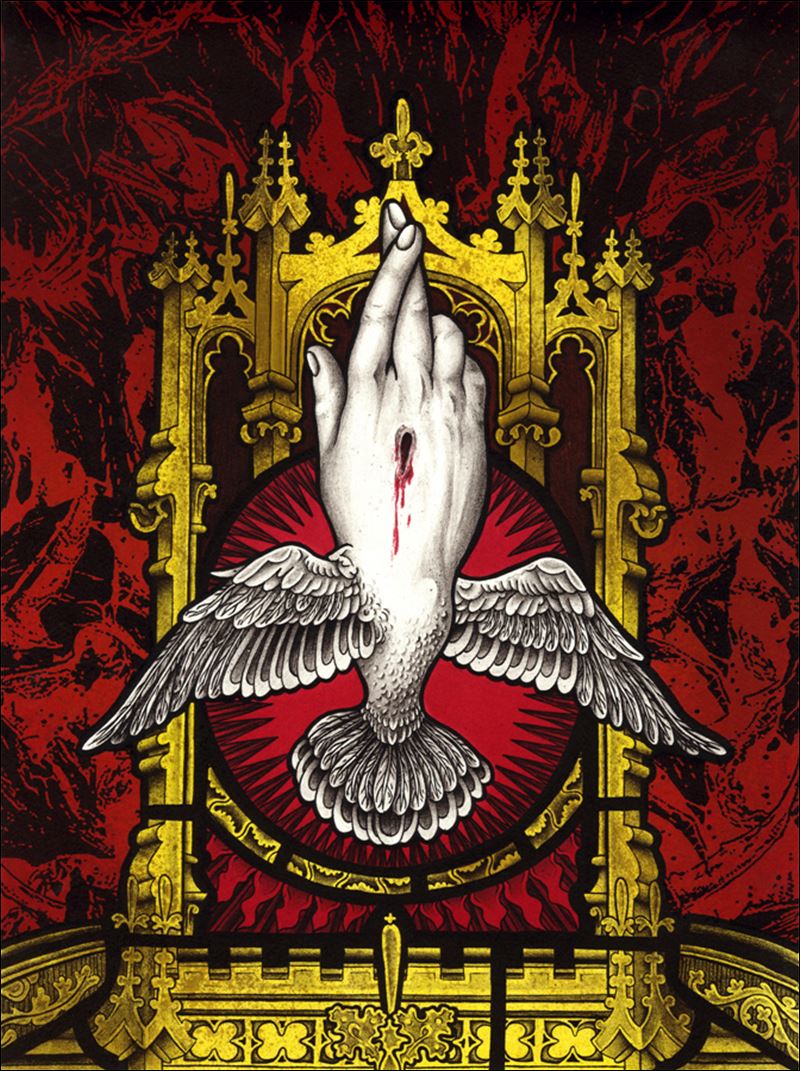
Throughout his career, Siqueiros' art accentuated angles, muscles and joints of the human form in his portrayal of a strong, revolutionary figure. In addition, many works prominently feature hands, which could be interpreted as another symbol of heroic strength through work.
Born in  Chihuahua, but growing up in Guanajuato, many details of Siqueiros’ childhood were confusing, in part because he gave misleading information regarding his life. What is known is that Siqueiros was the second of three children. His father, Cipriano Alfaro, was well-off, and his mother, Teresa Siqueiros, watched after their children: David, his sister, Luz, and his brother "Chucho" (Jesús). When Siqueiros was four years old, his father sent the children to be raised by their paternal grandparents after his mother had died.

The main part of Siqueiros’ life was spent between making his art and his interest in politics. Schooling aside, the opportunity to network with fellow students for political debate and marches and protests was a larger part of his educational experience. While in school, he came across the writings of Dr. Atl, who in 1906 published a manifesto calling for Mexican artists to look toward their ancestral roots to develop a national Mexican art style. This inspired the young artist to become active in politics. At the age of fifteen, Siqueiros was involved in a student strike at the Academy of San Carlos of the National Academy of Fine Arts, which eventually established of an “open-air academy”. Three years later, he and several of his friends from the School of Fine Arts joined Carranza’s Constitutional Army. In 1914, Siqueiros became interested in the army’s “post-revolutionary” infighting.  He traveled throughout Mexico during his military service and saw the difficult conditions of his country’s poor working class.  It instilled in him a lifelong passion to speak for the masses with his art and his political activities.

In 1919, he went to Paris and learned about Cubism, the work of Paul Cezanne and there he met Rivera, with whom he traveled to Italy to study the work of the Renaissance fresco painters. During this period, Siqueiros' artistic and political activities had become conjoined and  by 1921 he wrote a manifesto in Vida Americana, called "A New Direction for the New Generation of American Painters and Sculptors." He called for a "spiritual renewal" to bring back classical painting while infusing "new values" about the “modern machine” and the “contemporary aspects of daily life". Through this style, Siqueiros hoped to create a bridge between a national and universal art.
In 1922, Siqueiros returned to Mexico City work for the government with fellow artists Rivera and José Orozco painting murals in several prominent buildings. In 1923 Siqueiros helped found the Syndicate of Revolutionary Mexican Painters, Sculptors and Engravers, which addressed the problem of widespread public access through its union paper, El Machete, the weekly paper that became the official mouthpiece for the country's Communist Party. 
Siqueiros remained deeply involved in union labor activities, as well as the Mexican Communist Party, until he was jailed and eventually exiled in the early 1930s for his political connections.  Siqueiros produced a series of politically themed lithographs during this period, which were exhibited in the United States. His lithograph Head was shown at the 1930 exhibition “Mexican Artists and Artists of the Mexican School” at The Delphic Studios in New York City.   Siqueiros also worked in Los Angeles, where his murals there told the story of America's forceful relationship with Latin America. Siqueiros’s work was honored at the XXV Venice Biennale in the first ever Mexican exhibition with Orozco, Rivera and Rudolfo Tamayo in 1950, which recognized the international status of Mexican art. 
Siqueiros was involved with the Communist Party who in 1940 unsuccessfully tried to assassinate Leon TrotskyIn 1960, he  was unjustly arrested for openly attacking the President of Mexico and protesting the arrests of striking workers and teachers. While imprisoned Siqueiros continued to paint, and his works continued to sell.

He later settled in Cuernavaca where he lived until his death in 1974.

Most of this man's printmaking efforts were composed of strong figures, and the later colorful works, moved toward abstraction and abstracted brushwork that didn't look like his contemporaries. They are in fact quite curious pieces and call to mind spiritual musing upon his own travails and the seemingly bi-polar nature of his career path. I find the subtlety of his prints color, the massive weight of his self-portraits and the political bent of his action figures a reasonable and persuasive argument for his diverse subjects. In all, they relate closely to his painting style, and the somewhat chopped off compositions which remind me of El Greco's paintings of earthly and heavenly realms simultaneously depicted. There is also an element of Francisco Goya's Disasters of War prints with his butchered figures. Siqueiros butchers the body of Christ, showing his suffering, floating his body between the earth and heaven. 

Some people don't get those weirdly surreal images, but no matter. Siqueiros' work was consistent showing us the suffering of humanity, the suffering of the poor and the suffering of an artist as all artists suffer to bring forth their view of the world. His world wasn't a calm or happy place, but it was real, and it still speaks volumes for present-day Mexico's  suffering masses about the societal and political woes that have befallen that poor abandoned country.

Tuesday, April 23, 2013

The Mezzo-Manic Prints of Carol Wax

Man, oh Man, OH MAN! I mean Really, my inked up comrades, take a Good look! The images you are about to experience are about the BEST there are to see, and the artist (Carol Wax) has been setting the print world on its ears with these masterpieces. High praise you might say, but honestly, when Wax started exhibiting these prints, people's eyes popped, and one could hear the collective swearing of printmakers the world over, saying, "Damn, how does she DO it?" Well, we printmakers know 'how' she does the process, and it's hard and difficult and most would say its a pain in the a--, but it is a process that has historically, and continues to, yield rich, velvety black tones like no other. Technique aside, because I don't need to delve into that, nor will I, Wax's prints are simply dazzling.
Some obvious things that stand out in Wax's work are the cool, slick, gleam of her subjects; their rich detail and crisp lines. Wax would appear to treat them with a loving and reverent care, as an antique collector would for his/her possessions. She repeatedly produces astoundingly wonderful and complex compositions that invite our eyes to meander through them like one would through Cezanne's highly structured paintings or the Ab Ex brushstrokes of Willem DeKooning. They arrest our attention, but what they do next is transport us to another era, another period where the invention of machines and their design was an art. 
"My mezzotints of prosaic objects reflect my experience of the ordinary as extraordinary. By manipulating light, shadows, repetitive patterns, and skewing perspectives, I strive to reveal the anima in the inanimate."
Well, that's an understament if ever there was one. Wax take objects from a by-gone era of what look like the 1930s and 1940s. Some are portrayed frontally like icons of communication. The mechanics of other objects are mostly splayed out  in some state of dis-assembly. The gears and parts are strewen about, perfectly filling the picture plane. Further, Wax balances the light and shadows pouring over the objects in an engaging and tantalising manner. To be honest, the shadows activate the negative space, caressing the subjects. We'd just like to be able to touch them. 
The effect of Wax's works makes one feels like they're in an old black and white film, a noir, or a Garbo flick, or the film My Man Friday. The flash, the substance of those old objects that transport us to another place and time are all the more interesting when one considers that Wax is describing older mechanisms of communication via an even older tool of visual communication - (the mezzotint rocker). 
One wonders if Wax has a particular fascination for this era since she has spent so much time invested in these items, but in truth it doesn't matter. Who cares? These antiques are ageless and in perfect condition. Wax's choice of subject makes a decided departure from what one normally sees of this process, and for that we are grateful. As she once said in an interview, she understood that realistic images weren't necessarily seen as creative or conceptual, yet she boldly stated that there was a lot of printmaking that wasn't  creative anyway. Sadly, this is true.

I do like the way the artist puts a little chaos into a seemingly inanimate object - as in the case below, the typewriter's ribbon has gone haywire and is completely untangled from its spool. She makes the chaos fun. These images are sleek, sexy and invoke out tactile sensibilities. Granted her choice of subject is far from the norm associated with the process, but that is the beauty of printmaking, it's legacy evolves as do we, and investigative printmakers like Wax have helped propel an older method of making inked up images to give them a fresh look. 
And then, just when we think Wax is the mezzo-manic master of black and white imagery, she shocks us with this colorfully refined gem below. Can't you just hear that thing's keys go clack, clack, clack? I don't tire from looking at her work. She has made a clear and decisive impression upon our field, and we can marvel at what she's achieved. Here's to hoping more of our brethren are inspired to achieve something new with our own work after savouring hers.


Biography:
Carol Wax was born in New York City,1953. She attended the Manhattan School of Music, and earned a Bachelor of Music Degree in 1975 majoring in Flute Performance. She continued as a professional musician until 1980.
In the mid 1970s, she took printmaking courses at the Lake Placid School of Art, and then studied printmaking at the Pratt Graphics Center in New York City.  She looked at the work of Philip Pearlstein and gravitated to the historical process of mezzotint. Beginning in the mid-1980s, Wax  conducted research into historical printmaking techniques while continuing to develop her own work.  She spent several years learning and piecing together the history o her process until in 1990, Harry N. Abrams published The Mezzotint: History and Technique.
Wax has taught printmaking at the Rhode Island School of Design,  the State University of New York at New Paltz and at New Tork University, and Montclair State University
In 2002, Wax moved to upstate New York where she continues to work.
Awards:
2011 - Head Juror, First International Mezzotint Festival, Ekaterinberg Museum of Fine Arts, Ekaterinberg,  Russia
2009 -  Individual Support Grant, Adolph and Esther Gottlieb Foundation
2004 - Concordia Career Advancement Award
2003 - Artist's Fellowship Grant , New York Foundation for the Arts 
1994 - Louise Nevelson Award for Excellence in Printmaking from the American Academy of Ats and Letters
The MacDowell Colony Residency,  New Hampshire
1996 - designed a system for attaching adjustable weights to the mezzotint rocker, the first improvement to rocker design in over three hundred years.

Collections:
Metropolitan Museum of Art, National Museum of American Art, Philadelphia Museum of Art, Brooklyn Museum, Boston and New York Public Libraries


Contact: 914 788 5329 or cwax@earthlink.net